Can I Photograph My Art With an Inexpensive Camera
25 mutual Photography bug and how to fix them

Whether you're a consummate beginner or a seasoned pro, chances are that yous still encounter 1 of many common photography problems.
Fortunately, for every photography trouble, there is a photographic solution – and with that in listen we've put together a choice of mutual faults and every bit common fixes to solve any creative headaches.
Once you've undertaken our solutions for mutual photography problems, y'all'll be armed with a mental 'tool kit' with which to observe a speedy fix from herein on – simplifying your shoots and saving valuable time when it comes to your imaging workflow.
So, take a detailed read of our problem solving tips and tricks; after all, forewarned is forearmed!
i. My photos are all blurred
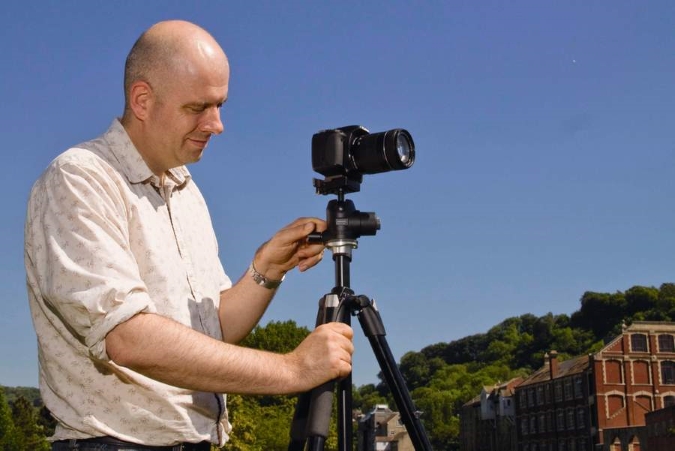
Your photos are blurred because your camera was unable to accurately focus on the subject field. There can be several reasons for this – either there was insufficient lite for the camera's auto focus arrangement, or the same low light situation amplified whatever camera milkshake resulting from yous trying to take an paradigm in insufficient calorie-free, without the steadying influence of a tripod.
Alternatively, if you're shooting swift moving subjects, the shutter speed y'all're using may be besides slow and you demand to switch to outburst (continuous) mode, or, if lighting is actually the issue, make utilize of artificial wink, or crash-land up the camera's ISO lite sensitivity settings to ISO1600 or above to endeavor to resolve the result.
If you were focusing manually through the viewfinder, perhaps the camera'south dioptric adjustment bike needs adjusting to provide a clear image via which you can determine accurate focus in the outset place. Most digital cameras now besides provide an enlarged portion of the image on the rear LCD screen when you're attempting to manual focus – further aiding accuracy and avoiding mistiness.
If the trouble is because yous're shooting a subject very far away with a very long zoom lens, then make sure the camera's and/or the lens' congenital in image stabilisation option is activated to minimise any blur. And, again, use a tripod!
2. The colors in my photos look incorrect
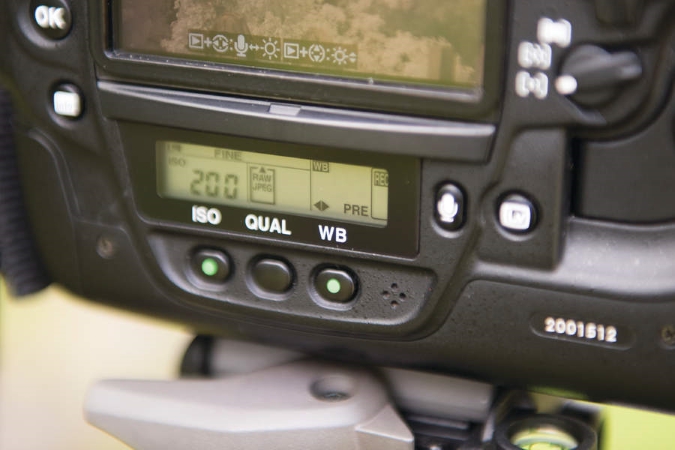
The most mutual solution to this very mutual photography problem comes down to finding the right white balance setting for both photographic camera and subject.
Most of us will be aware that tungsten/artificial lighting lends a warm orange glow to shots. And then, if you're shooting indoors without flash and bumping up the ISO settings to compensate and avoid blur, you'll exist left with orangish-y images.
Fine, if that's the wait y'all're going for, just if it's a more natural await you lot're later, simply drill into your photographic camera's menu of white balance settings and select the icon that most closely resembles a mutual light bulb and endeavor the shot again with this compensatory mode selected.
You'll also discover settings on your camera for a variety of artificial and natural lighting weather condition – including strip lighting, natural daylight (which can, conversely, lend photographs a cool blue color cast), cloudy days and so on. Yous'll probably as well observe a few specific night-time settings.
Or alternatively there is oftentimes the take a chance to achieve a custom white balance – achieved simply by property up a piece of white newspaper in front of the lens. Simply experiment with white remainder settings until you discover the await – and colors – yous're after.
iii. Everyone in my photos has cherry optics
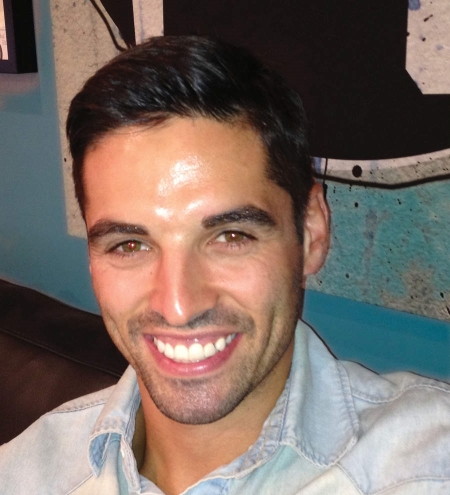
Unless information technology'south the morning time after a particularly heavy nighttime, the most likely culprit is the camera's built-in flash, especially when it's located very close to the camera lens. The 'red eye' effect is therefore caused past the subjects' eyes reflecting the artificial light from the flash back into the photographic camera lens – giving that very unnatural expect.
Fortunately, this age onetime problem is less common than information technology once was, due to most mod cameras offering a 'scarlet middle reduction' setting amongst the user selectable flash settings that takes two flashes in quick succession. Nosotros can't practise annihilation about subjects with their eyes shut nonetheless – although software has been written for cameras to recognise when this has occurred and flag it upwardly to the user.
Only re-accept the shot and hope for second (or third time lucky). Actually that's i take hold of–all solution: take every bit many shots as you tin can and you're spring to cease up with one you're happy with.
4. My images await very grainy and noisy
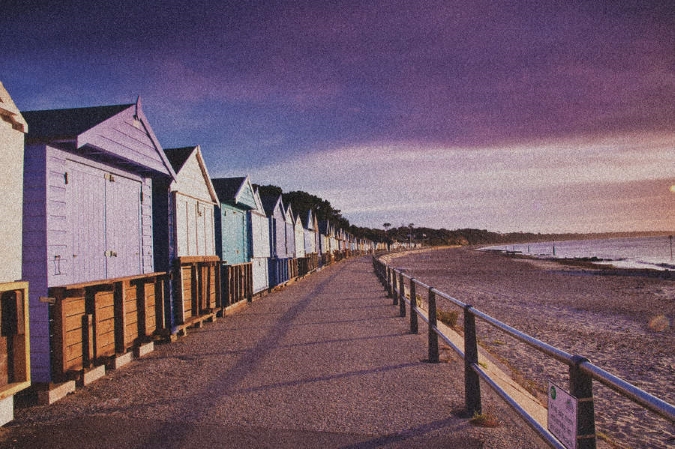
This volition exist due to the fact that the camera has automatically selected a loftier sensitivity setting to compensate for lack of light or lack of available flash, in an try to limit and hopefully avoid image mistiness/photographic camera shake.
The trade off for reducing blur is that paradigm grain – as well referred to as 'image noise' – can visibly intrude into our images, particularly on those cameras with physically smaller sensors already burdened with a high pixel count / resolution.
To avoid the ugly, grainy expect, manually select a lower ISO setting (less than ISO1600, say) and compensate past placing the photographic camera on a flat steady surface instead of attempting to use it paw held. All-time yet, of form, employ the utilize of a tripod and put the photographic camera on self-timer when shooting and then you're not having to physically press the shutter release button and thereby possibly avoid introducing blur via the fact y'all're 'jogging' the camera.
Grainy images are less of a trouble for more sophisticated cameras with physically larger sensors and/or more than pocket-size resolutions, as there are less pixels crammed into a smaller space, and then they're less visible when the sensor is pushed to its performance limits.
five. My photos are either too nighttime or too bright
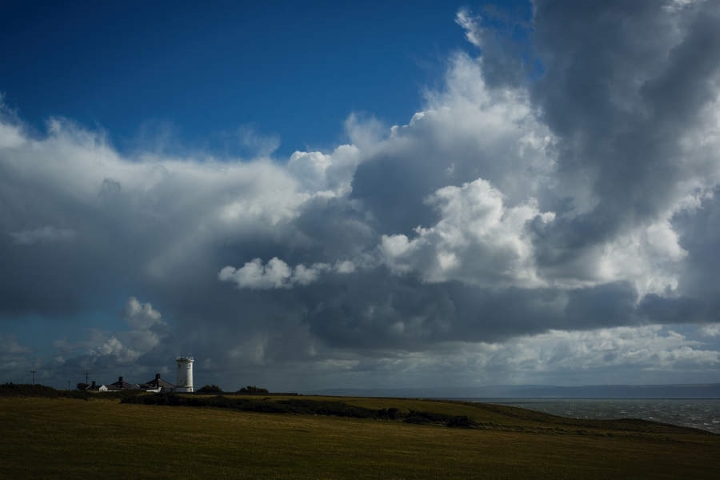
The easiest way to remedy this detail photography trouble is to drill into your camera'due south exposure compensation settings – ordinarily given in increments of +/- 3 EV, though some can extend to +/- v EV.
Commonly, we get the almost natural results when these settings are on the median of '0', only on a very sunny twenty-four hour period, and if you're using a bright/ fast lens (say f/1.8, the lower the number, the more calorie-free the lens volition allow in) then it may work best to dial down these settings to minus i or lower – in other words aiming for a darker exposure than normal to compensate for the fact that lighting weather condition are outwardly brighter than usual.
The same works in opposite if the lighting is darker than y'all'd similar. In these circumstances you can go for a brighter setting of +i or +ii. Fortunately, a lot of modern digital cameras show the effects of such exposure compensation adjustments in real time on your camera'south rear LCD screen (or electronic viewfinder), so you can see the effects your adjustments may have before you lot fifty-fifty clasp off a shot. This allows y'all to toggle back and forth between the incremental exposure comp settings offered until you lot observe the 'sweet spot' for a correctly exposed epitome.
6. The sky is too bright in my shots, or the foreground is too night
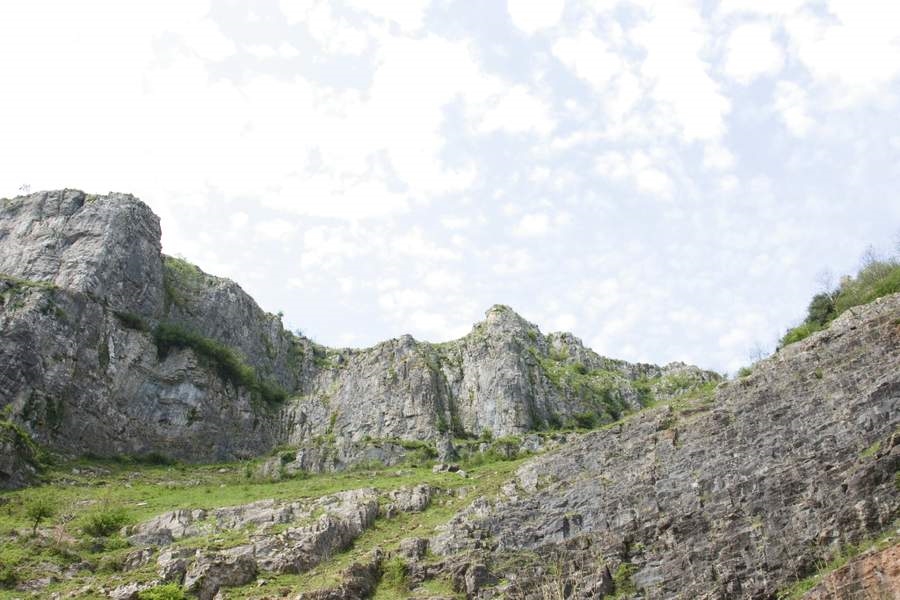
Here the camera's own well-intentioned metering system is either causing the 'trouble', or information technology'due south the direction and angle of your gear up itself. Merely put, if you point the camera at a very vivid sky, it will automatically adjust the exposure to compensate, throwing whatever is in the foreground into shadow.
Conversely, if y'all focus the camera on whatever is in the foreground on a very sunny twenty-four hour period, the sky will appear burnt out, or much brighter than it already is. Either way, you lot volition lose detail in the sky.
A way around this is to endeavor taking the same shot from a different angle, with the light in forepart of your subject – so it shines straight on it – rather than behind it, where it is effect causing your subject to exist silhouetted, or thrown into shed. Another 'play a joke on' is to force the camera to fire its flash, even though, as it is a very sunny twenty-four hours, it wouldn't normally. This will allow the camera to meter for the bright sky, only for the flash to also illuminate whatever's in the immediate foreground, resulting in a more 'balanced' shot.
Some other style to resolve the above conundrum, if your lens gear up allows for it, is to invest in a graduated neutral density or 'ND grad' filter and attach it to your lens to recoup, or to shoot in Raw instead or JPEG and run across how much actress detail you tin can eke from either sky or foreground in post production. Broadly speaking, underexposing the scene allows us to excerpt more particular, which is otherwise simply lost if the image is likewise vivid.
7. Buildings in my photos are leaning or bowed, while people announced elongated or distorted
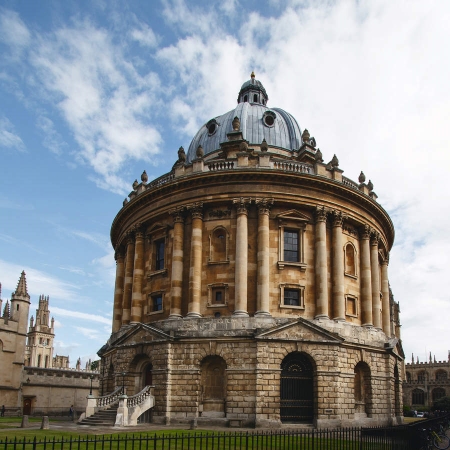
Shooting a field of study up shut with a wide angle lens setting can event in the above 'problems' – making the superlative, bottom and sides appear to bow out – only again, unless these are the creative choices you're going for – to emphasize scale or add bear upon and presence, mayhap – so they're easily remedied.
Just take a couple of steps dorsum so you're not so shut to the subject. If you've a zoom lens you tin can also trying zooming in a chip – and stepping back – to compensate, and see if those leaning or converging 'verticals' start to announced closer to how they look when viewed with our own eyes.
If you really want to become serious, and spend a lot of money into the bargain, so a compensatory tilt and shift lens, as used by the likes of architectural photographers, is another option. Only effort the stepping back, and/or zooming in option first and see how that changes the perspective of your shot.
Generally speaking, if y'all can make it at a setting close to 35mm, or 50mm on a total frame photographic camera, then this is well-nigh to what nosotros perceive with our own eyes, and so is skilful for street photography in particular, when nosotros're looking to photograph both people and buildings, and represent them in a natural and immediate visual style.
eight. Why doesn't my photographic camera properly capture the intense colors of a dusk I tin run into with my own eyes?
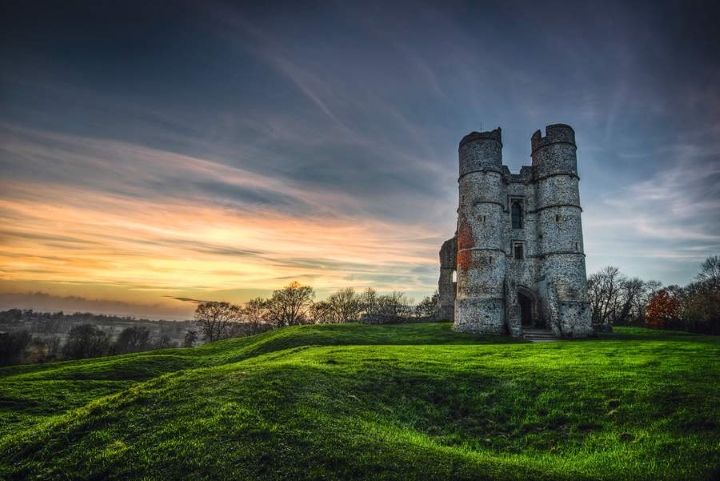
When you bespeak the camera at anything bright, or with a high bias of ane colour in particular, the camera will attempt to automatically compensate and make it at a upshot that is more than neutral.
This tin can, frustratingly, upshot in a rather washed out, insipid representation of one of the natural world's greatest displays: a sunset. Here, your camera's automatic white balance setting is at least partly to blame, and, as it is a common 'fault' at that, a lot of cameras really include pre-optimised sunset modes to deliver more pleasing results.
If you don't take this option, however, or the colors withal aren't quite as you'd hoped, endeavour switching to a user-selectable daylight or sunlight white residue setting instead. You can also effort activating the camera's Brilliant color or pic effect option, if it has ane, to heave the saturation for added drama, too every bit pointing the camera at a brighter portion of the paradigm – whereby it will endeavor to compensate by darkening the overall image – earlier re-framing the shot. In this way you will preserve the more vivid and intense detail of the sunset that may otherwise only appear washed out. The alternative is to dial down the exposure compensation settings manually.
ix. My sporting and action images are all blurred. Why can't my photographic camera keep up?
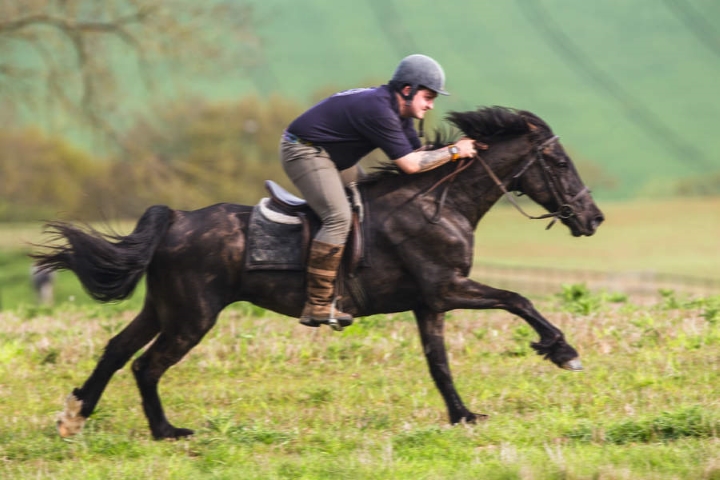
When it comes to auto focus options, the majority of digital cameras offering 2 modes: unmarried and continuous. While unmarried mode works all-time for general and static photography (whereby auto focus locks onto target with a half press of the shutter release push button and maintains focus every bit yous press the shutter release down fully to take the shot), continuous is best for moving subjects.
You tin can besides trying using yous camera'due south burst mode – whereby the rapidity of the shots captured is increased, hopefully matching with the speed of the subject you're attempting to photograph. This helps ensure that, while you may however go a few blurred frames, there is a higher risk of a selection of them eventually existence 'on the money' in terms of a sharply focused shot.
Additionally, you can do all of the above while also panning with your camera and subject area – in other words following the direction of its move – to ensure that it stays within your frame, and in focus.
Allow for some trial and mistake and, as usual, take as many shots as you can to increase your chances of a photograph you'll desire to keep! Finally, some other selection if your camera allows an 8 megapixel withal to be extracted from a 4K video sequence is to try that option. You'll have even more chance of grabbing a winning all the same when y'all're finer shooting at up to 30fps.
10. I'm using manual focus for precise command over my images, but results are hitting and miss
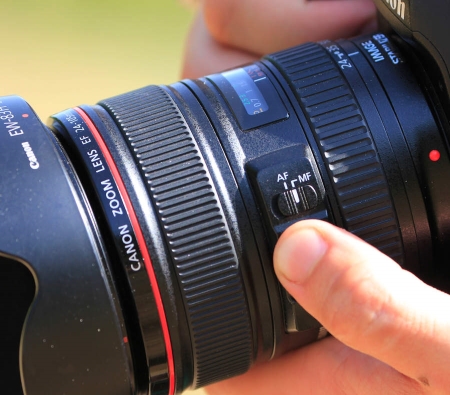
Do makes perfect every bit the quondam aphorism runs, and anticipating what your subject area is going to be doing and where in the frame they are is crucial, particularly when focusing manually.
Even if you want to 'take back control', here digital cameras can withal aid out, by automatically displaying an enlarged portion of the subject on screen equally a further check that everything is equally precisely and sharply focused as you would hope it to be.
More sophisticated cameras also offer up something called Focus Peaking, whereby the areas of the image that are sharp are highlighted on the LCD screen and/or electronic viewfinder if the camera has 1. Again, it'due south an assist to achieving more precise results.
Fortunately with a digital photographic camera we tin zoom in and cheque the accuracy of focus for the image we've merely taken on screen, and make farther adjustments if the focus is slightly off.
11. My horizons aren't straight
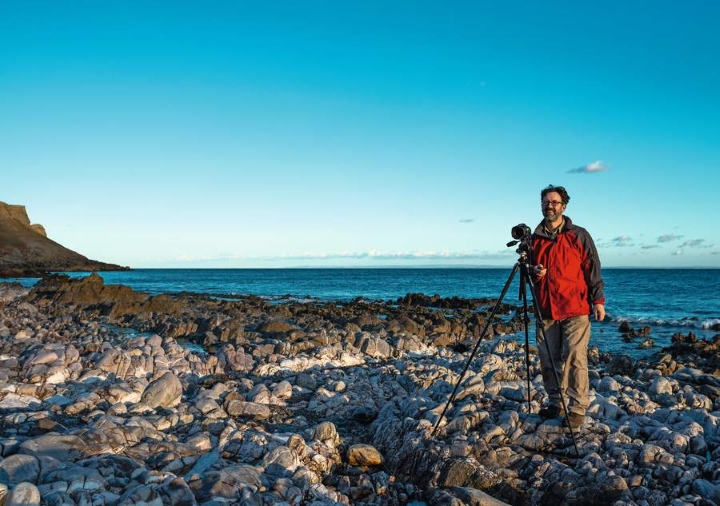
The upshot here is '2 legs bad, three legs good'. In other words, our ain two legs are rarely equally constructive equally using a tripod with a spirit level to make sure everything is lined up nice and accurately – and moreover flat.
Luckily, an increasing number of cameras are now offering a built-in spirit level (or virtual horizon) that tin exist viewed on the rear LCD to ensure that horizons are straight and true – a horizontal green line typically flashing on screen.
Again, if you're non sure whether you've got the horizon level or not without viewing on a screen larger than your camera's own, merely take two or three shots of the same subject – while doing your level best.
12. I desire to use shallow depth of field for more flattering portraiture, but find it difficult to keep the crucial areas precipitous
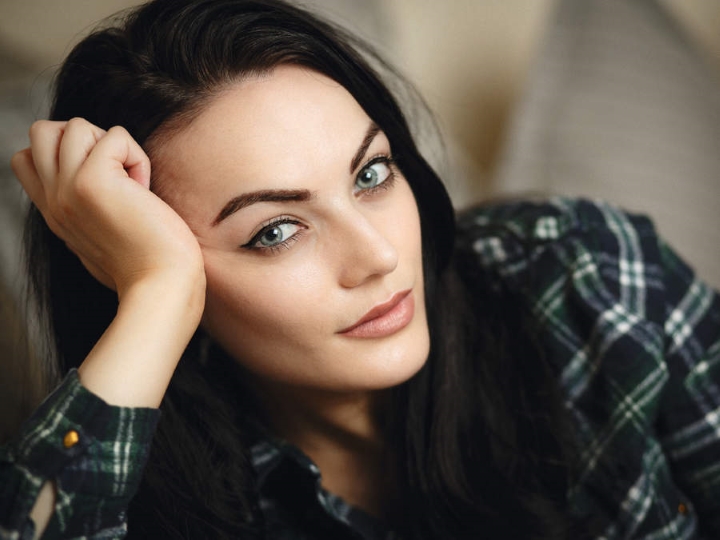
When attempting any shallow depth of field portraits – whereby you lot keep the central portion of the epitome dramatically pin precipitous, while subtly (or not so subtly) blurring both the foreground and groundwork – it's crucially important that the eyes are the sharpest points in your image.
However, if you're using a peculiarly fast prime lens (very depression f number / bright aperture), the area that is in focus can be so narrow that even the human action of pressing the camera's shutter release tin can jog the focus area slightly, thereby irresolute the emphasis of the shot.
Y'all can go around this by mounting the photographic camera on a tripod and using a cablevision release, apparently, but a more practical solution is merely to accept a higher number of images than usual, increasing the odds of getting the expanse that is sharply in focus exactly where you lot'd want it.
- These are the best photography tips effectually correct now.
Related articles
Source: https://www.digitalcameraworld.com/features/25-common-photography-problems-and-how-to-fix-them

Post a Comment for "Can I Photograph My Art With an Inexpensive Camera"